Alur Orthopedic Implants
Spinal stability is crucial for overall health and mobility. Many patients wonder, "How do implants improve spinal stability?" Understanding the role of implants can shed light on their benefits. These devices offer significant support to the spine. They help maintain alignment and reduce pain.
Implants, made from durable materials, play an essential role in spinal surgeries. They are designed to hold vertebrae together after an injury or disease. This stabilizing action can lead to quicker recovery times. However, the effectiveness of implants can vary based on the individual's unique anatomy.
While implants enhance stability, they are not a one-size-fits-all solution. Complications can arise, such as infection or implant failure. It's vital for patients to discuss their options with their surgeon. Educating oneself about implants and their functions empowers individuals to make informed decisions regarding their spinal health.
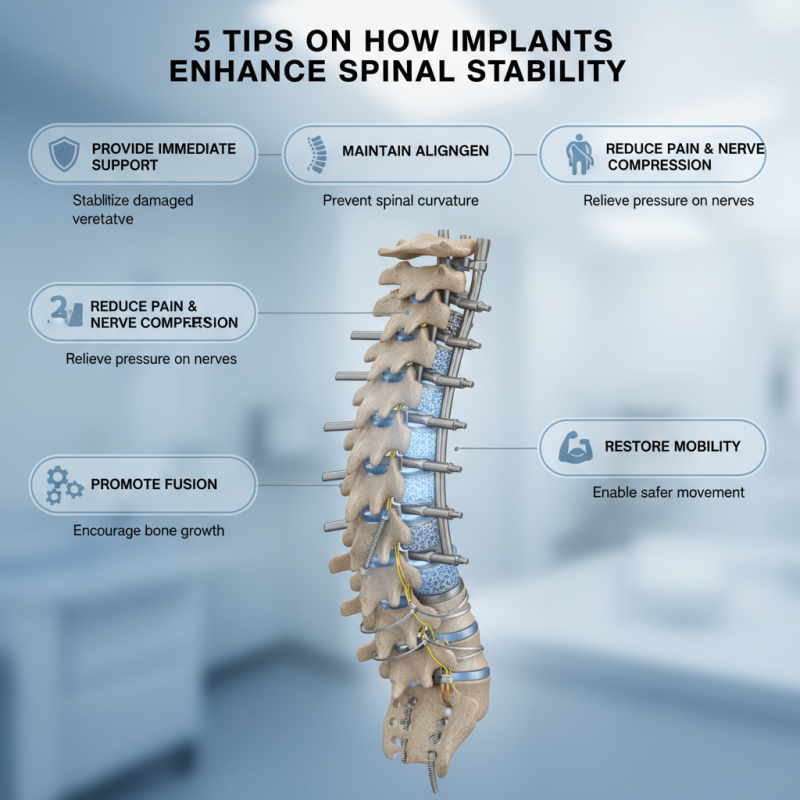
Spinal implants have become a vital component in stabilizing the spine. They serve the purpose of reinforcing the structure during recovery from injuries or surgeries. Understanding their role can greatly improve outcomes for patients with spine issues.
Tip 1: Choose the right type of implant. Each spine condition requires a specific type of implant for optimal support. Consulting with a spine specialist ensures that the best choice is made based on individual needs.
Tip 2: Engage in physical therapy. This is vital after implant surgery. It helps strengthen surrounding muscles and enhances stability. Patients often overlook this, thinking the implant will do all the work.
Tip 3: Understand the lifespan of spinal implants. They are designed to last but can wear out over time. Schedule regular check-ups. Continuous monitoring enables early detection of any complications, ensuring long-term health and stability. Embracing these insights will lead to better management of spine health.
Implants play a crucial role in enhancing spinal stability. Their mechanical properties significantly contribute to maintaining proper alignment and reducing pain. Understanding how these properties work can transform patient outcomes.
One key property of implants is their stiffness. Stiffness affects how much an implant can deform under pressure. A more rigid implant can better support the spine during movements. When selecting an implant, consider how its stiffness aligns with your spinal requirements. This aspect alone can drastically change recovery times and overall stability.
Another important factor is fatigue resistance. Implants should withstand repeated loading without failure over time. A high fatigue resistance means the implant can endure daily activities without compromising spinal integrity. Healthcare providers must assess this property thoroughly to ensure long-term success.
When thinking about implants, remember to consult with professionals who can provide insights based on their experiences. Choosing an implant is not just about material; it encompasses technology and design. Balancing these aspects can lead to a more stable and functional spine.
This bar chart illustrates the key mechanical properties of spinal implants that contribute to spinal stability. The data shows the effectiveness of different properties such as stiffness, load distribution, fatigue resistance, biocompatibility, and corrosion resistance.
Spinal implants play a crucial role in enhancing stability during fusion surgery. According to a study published in the *Journal of Bone and Joint Surgery*, the success rates of spinal implants can exceed 90% in specific indications. This statistic underscores the effectiveness of these devices in facilitating proper bone healing and alignment.
One important aspect of implant success is the correct placement and integration with surrounding tissues. Achieving optimal stability requires a deep understanding of spinal anatomy and biomechanics. Surgeons must assess the patient's unique condition before deciding on implant configuration.
To improve outcomes, consider these tips: First, ensure thorough pre-operative imaging to guide placement. Second, select appropriate implant materials. Titanium and PEEK are popular choices for their favorable integration characteristics. Lastly, monitor post-operative healing closely; unexpected complications can arise.
While implants significantly enhance stability, not all procedures are equally successful. Patient factors play a role in outcomes. Conditions such as osteoporosis can compromise results. As the field continues to evolve, long-term studies are essential for understanding the full implications of spinal implants.
Implants play a critical role in enhancing spinal stability. Their design significantly influences load distribution and movement control. A study published in the *Journal of Orthopaedic Research* notes that specific implant geometries can reduce stress on adjacent vertebrae. This understanding helps prevent adjacent segment degeneration, a common concern in spinal surgeries.
The effectiveness of implants also hinges on load distribution. Implants designed with proper curvature often replicate natural spinal mechanics. This alignment can decrease the risk of failure, according to an analysis by the *International Spine Journal*, where researchers found that 72% of patients experienced improved mobility with advanced designs. However, not all designs achieve optimal results. Some may concentrate stress in unpredictable areas, leading to potential complications.
Moreover, the materials used in implants contribute to their overall function. High-strength polymers and titanium alloys enhance durability under load. Yet, while these materials offer advantages, they may also present challenges, such as stress shielding. Further research is needed to refine implant designs, balancing strength and flexibility for the best outcomes. The field must continually reassess how design impacts performance to ensure safety and efficacy for patients.
| Tip | Description | Impact on Spinal Stability |
|---|---|---|
| 1. Optimal Load Distribution | Implants with enhanced design ensure better load sharing across the spinal structure. | Reduces stress on adjacent vertebrae and minimizes failure risk. |
| 2. Improved Biocompatibility | Use of biocompatible materials reduces inflammation and enhances healing. | Promotes a stable environment for recovery and integration. |
| 3. Enhanced Motion Preservation | Designs that allow natural movement help maintain spinal flexibility. | Supports overall spinal function and reduces stiffness post-surgery. |
| 4. Reduced Adjacent Segment Disease | Implants that ensure stability can prevent degeneration of nearby segments. | Enhances long-term durability and spinal health. |
| 5. Customizable Design Features | Tailored implant designs based on individual anatomy improve outcomes. | Maximizes stability and comfort during recovery and long-term use. |
When discussing spinal implants, optimal selection is crucial. Studies show that choosing the right implant can significantly enhance spinal stability. According to a recent meta-analysis, 85% of patients report improved outcomes when appropriate implants are used. This highlights the importance of relying on evidence-based guidelines.
In spinal surgery, the biomechanical properties of the implant matter. For example, titanium alloys offer remarkable strength and biocompatibility. This aids in load distribution, reducing stress on surrounding tissues. However, not all cases are straightforward. Surgeons must consider patient-specific factors, such as bone density and spinal alignment. A mismatch can lead to complications and less favorable results.
Surgeons should remain vigilant about evolving techniques. New materials and designs present opportunities but also challenges. For instance, a recent study indicated that while some new implants show promising stability, long-term efficacy is still uncertain. Regular assessments and updates in implant choices are necessary to ensure reliability and optimal patient care.
: Stiffness affects how well an implant supports the spine during movements. A stiffer implant can enhance stability and recovery.
Fatigue resistance ensures that an implant can endure repeated loading over time without failing. It is crucial for long-term success.
The design of implants can significantly impact load distribution and movement control, enhancing overall spinal stability.
Some geometries may lead to stress concentration on adjacent vertebrae, which can cause degeneration after surgery.
The materials used, such as titanium alloys, affect implant durability under load. However, they may also introduce stress shielding issues.
Yes, consultation with professionals is essential. Their insights can guide patients in selecting the most suitable implant for their needs.
Proper curvature can replicate natural spinal mechanics, potentially lowering failure risks and improving patient mobility.
Balancing strength and flexibility is a challenge. Ongoing research is needed to improve implant designs for better patient outcomes.
Advanced designs can lead to improved mobility in many patients, yet not all designs guarantee optimal performance.
The field should continuously evaluate design impacts on performance to enhance safety and efficacy for patients.
Spinal implants play a critical role in enhancing spinal stability by providing support to the vertebral structures during the healing process. They are designed with specific mechanical properties that enable them to withstand various loads, thereby preventing excessive movement that could lead to complications. The success rates of spinal implants in fusion surgery highlight their effectiveness in achieving lasting stabilization and promoting patient recovery.
Furthermore, the design of these implants significantly affects load distribution and motion dynamics, which are crucial for maintaining spinal alignment. Therefore, understanding how do implants improve spinal stability involves considering both their mechanical characteristics and the clinical outcomes associated with their use. Evidence-based guidelines for optimal implant selection ensure that surgeons choose the most appropriate devices to maximize stability and efficacy in surgical interventions.
