 Alur Orthopedic Implants
Alur Orthopedic Implants
Alur Orthopedic Implants
Orthopedic implants can restore movement, reduce pain, and support daily independence. They are not always permanent. Wear, infection, loosening, fracture, instability, or repeated dislocation may damage the surrounding joint.
What is revision surgery for orthopedic implants? It is an operation that removes, repairs, or replaces part or all of a previous implant. A surgeon may revise a worn hip liner, exchange a loose knee component, or rebuild bone around a failed device. The procedure is usually more complex than the original replacement. Scar tissue can limit visibility. Bone loss may require metal augments, bone grafts, or longer stems.
National registries provide useful context. The American Joint Replacement Registry’s 2024 Annual Report recorded millions of hip and knee procedures across participating U.S. hospitals and surgery centers. Its data support long-term monitoring of implant performance and revision patterns. The National Joint Registry’s 21st Annual Report also tracks more than three million joint replacement procedures in England, Wales, Northern Ireland, and the Isle of Man. These reports show that revision risk differs by implant type, patient age, activity, diagnosis, and surgical technique.
The numbers are informative, not personal predictions. Registry coverage is incomplete, and definitions can vary. That limitation deserves attention.
A careful evaluation often includes physical examination, standing X-rays, blood tests, and sometimes aspiration or advanced imaging. Surgeons then balance pain, function, infection risk, bone quality, and recovery demands. Patients should ask which component failed, why revision is recommended, and what evidence supports the proposed implant. Experienced care matters. So does honest uncertainty.
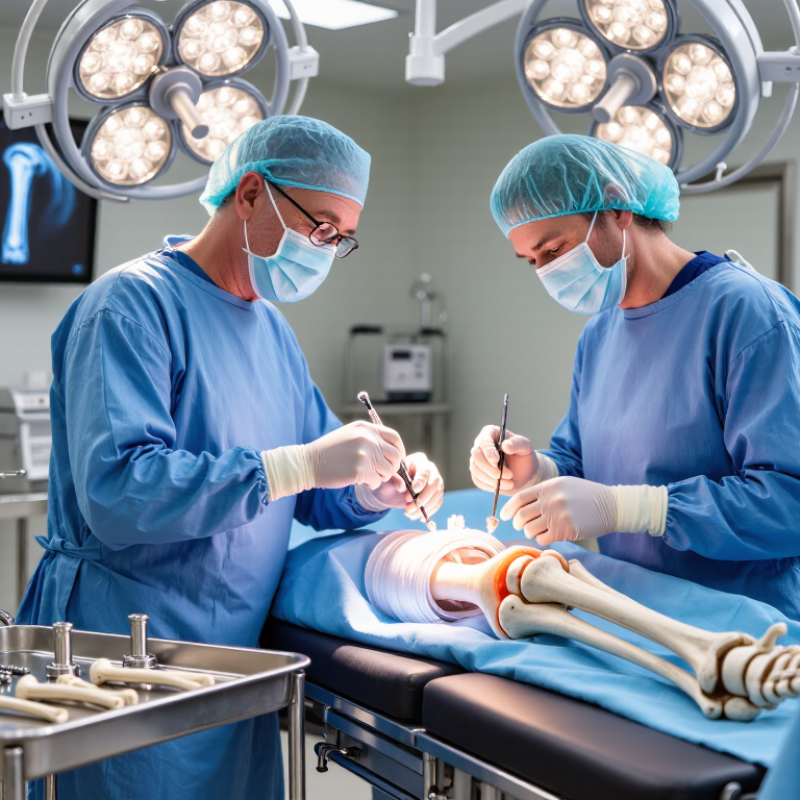
Revision surgery for orthopedic implants means repairing, replacing, or removing an implant that no longer works as intended. It may involve a loose joint component, worn materials, bone loss, infection, or repeated dislocation. Sometimes only one part needs replacement. In other cases, the entire implant must be removed.
The evaluation is detailed. An orthopedic specialist reviews pain patterns, walking ability, previous operations, and medical history. X-rays may show shifting or damaged components. Blood tests can help investigate infection. A CT scan may reveal bone loss that ordinary images miss. The plan often changes during surgery. Even careful preparation cannot predict every finding.
Revision surgery is usually more complex than the first operation. The surgeon may rebuild weakened bone with graft material or specialized supports. Recovery can take longer, and movement may be restricted at first. Physical therapy often begins with simple exercises, such as ankle pumps or assisted walking. Results depend on implant location, bone quality, overall health, and the reason for revision. Risks include infection, blood clots, nerve injury, and another failure. These risks should be discussed clearly, not softened. Patients sometimes expect revision surgery to feel exactly like the original procedure, but that assumption can create frustration. A realistic recovery plan may need adjustment after each follow-up visit.
Revision may be considered for loosening, infection, instability, fracture, wear, or poor alignment. Pain alone does not prove failure. Sometimes targeted treatment or rehabilitation is safer.
Report persistent pain, increasing stair pain, instability, redness, wound drainage, fever, or sudden swelling. Fever and drainage need prompt medical attention. Do not wait too long.
Doctors review pain, walking changes, movement, daily limitations, and the time since implantation. They may perform an examination, X-rays, blood tests, or advanced imaging. Joint-fluid testing may be needed when infection remains possible.
No. Normal results do not always exclude infection. Doctors may compare several findings, including wound appearance, imaging, symptoms, and joint-fluid results. The process can feel slow.
The surgeon exposes the implanted area and removes damaged or unstable components. Scar tissue can make this difficult. Tissue samples may be collected during surgery. The remaining bone is then prepared for replacement parts.
Bone graft material or specialized supports may help rebuild the area. The surgeon aims to restore stability, alignment, and useful movement. A perfect original result is not guaranteed.
It is often more complex because scar tissue and reduced bone quality can limit the available options. Risks may include blood loss, infection, fracture, and slower recovery. The details vary greatly.
Keep operation records, imaging, medication lists, and written questions. Ask whether infection testing, rehabilitation, observation, or another opinion is appropriate. Your goals matter, especially when symptoms and scans disagree.
Nurses monitor pain, circulation, wound drainage, and early movement. Physical therapy may begin within a day, depending on the operation and health. Recovery can be slower. Small setbacks happen. Doing too much too soon may interrupt progress.
Revision surgery for orthopedic implants is a procedure performed to repair, replace, or adjust an existing implant when it no longer provides proper support or causes discomfort. What is revision surgery for orthopedic implants? It may be needed because of normal wear, loosening, infection, bone changes, injury, implant movement, or ongoing pain and reduced function. Doctors evaluate the situation through a medical history, physical examination, imaging tests, and sometimes laboratory studies to identify the cause and determine whether revision is necessary.
During the operation, the surgeon removes or corrects the problematic components and may restore damaged bone or surrounding tissue before placing new implant parts. Recovery can take longer and may involve pain management, physical therapy, activity restrictions, and regular follow-up visits. As with any major procedure, possible risks include infection, blood clots, stiffness, nerve or tissue damage, and the need for additional treatment. Careful monitoring and adherence to the rehabilitation plan support safer recovery and long-term implant performance.
