Alur Orthopedic Implants Alur Orthopedic Implants

Why Wait to Exercise After Orthopedic Implant Surgery?

Time:2026-10-26 Author:Charlotte
0%

After orthopedic implant surgery, movement can feel like a negotiation between hope and caution. The question, “Can I exercise after orthopedic implant surgery,” deserves more than a quick yes or no. Your implant type, surgical approach, bone quality, wound condition, and recovery progress all influence the answer. A knee replacement patient may begin gentle ankle pumps beside the hospital bed, while a shoulder implant patient may need strict movement limits for several weeks.

Orthopedic surgeon Dr. William J. Hozack has emphasized a practical recovery principle: “The goal is to return patients to the activities they enjoy, safely and gradually.” That message matters because healing tissue does not follow impatience. Walking short distances, using prescribed physical therapy, and practicing controlled range-of-motion exercises may support recovery. Heavy lifting, running, jumping, or twisting can create unnecessary stress before the joint is ready. Your surgeon’s restrictions are not suggestions.

This guide explores why waiting can protect the implant and surrounding tissues. It also explains how clinicians usually judge exercise readiness. Pain, swelling, weakness, wound drainage, or a sudden loss of movement should never be ignored. Contact your medical team when these signs appear. Recovery is rarely perfectly linear. Some days may feel strong, then unexpectedly difficult. That does not always mean failure, but it does require reflection and professional guidance. Exercise should rebuild confidence, not prove toughness.
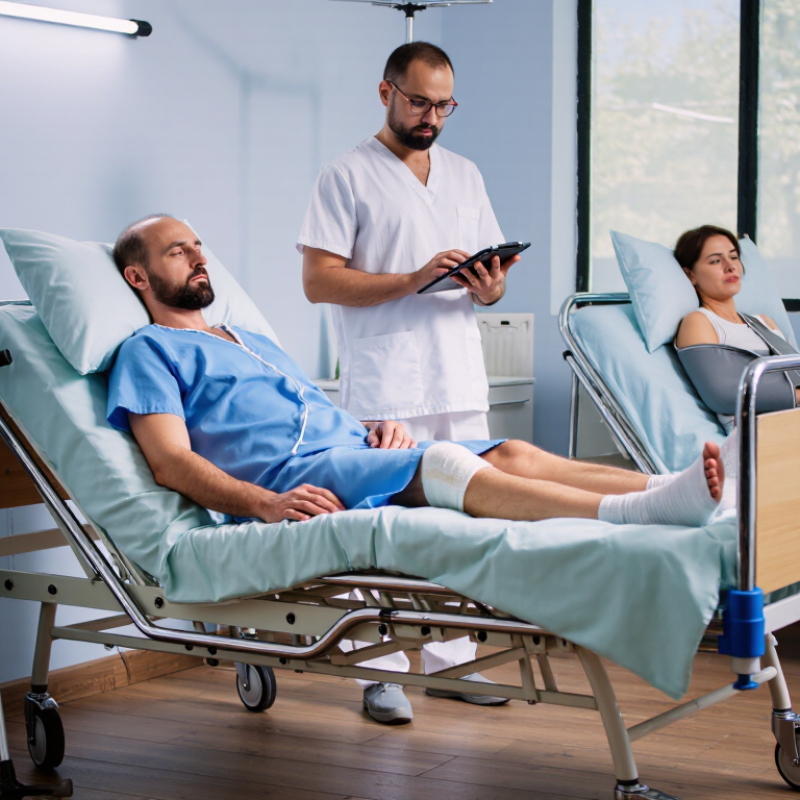
Why Wait to Exercise After Orthopedic Implant Surgery?

Understanding Healing After Orthopedic Implant Surgery

After orthopedic implant surgery, healing is not simply a matter of waiting for pain to disappear. Bone, muscle, skin, and soft tissue recover at different speeds. An implant may feel stable, yet nearby tissue can remain sensitive and weak. Gentle movement may improve circulation and reduce stiffness, but the right timing depends on the joint, surgical method, and your health. Your orthopedic surgeon and physical therapist should guide each stage. Their advice is safer than a generic online schedule.

Tips: Follow your prescribed exercise plan closely. Start with controlled movements, not heavy resistance. Use support when walking if instructed. Stop if you notice sharp pain, increasing swelling, wound drainage, fever, or unusual warmth. Report these changes promptly. Do not treat discomfort as proof that exercise is working.

It is easy to believe that faster exercise means faster recovery. That assumption can backfire. Recovery is rarely perfectly linear; strength may improve one day and feel limited the next. Rest is part of rehabilitation, not a sign of weakness. Still, avoiding all movement can also slow progress. The difficult part is finding the safe middle ground. Small improvements matter, such as standing longer, bending slightly farther, or walking with better control. Your plan may need adjustment as healing develops.

How Early Exercise Can Affect the Implant and Surgical Site

Why Wait to Exercise After Orthopedic Implant Surgery?

How Early Exercise Can Affect the Implant and Surgical Site

Exercise after orthopedic implant surgery is not automatically unsafe. The timing and intensity matter. Early movement can improve circulation, reduce stiffness, and help restore basic independence. However, the implant and surrounding tissues still need protection during healing.

A short walk may be appropriate when cleared by the surgical team. Heavy lifting, jumping, or deep bending can create excessive stress around the implant. This stress may irritate the surgical site, increase swelling, or disturb healing tissues. In some cases, poor loading may contribute to pain, instability, or delayed recovery. The implant itself may be strong, but the bone, muscles, and repaired tissues need more time.

Small details matter. Pain that worsens after exercise deserves attention. So does increasing redness, drainage, warmth, or sudden loss of movement. A physical therapist may begin with ankle pumps, gentle muscle tightening, or supported standing. Later, resistance bands and stairs may be added gradually. The plan should reflect the implant location, surgical method, bone quality, and overall health.

The difficult part is that recovery rarely follows a perfect timetable. Feeling energetic does not always mean the surgical site is ready for more load. Conversely, complete inactivity can also create problems. Patients should ask when to walk, how much weight to bear, and which movements remain restricted. Their surgeon’s instructions should guide every increase in activity.

Why Wait to Exercise After Orthopedic Implant Surgery? - How Early Exercise Can Affect the Implant and Surgical Site

Postoperative phase Usually appropriate activity* Potential benefit Possible effect on the implant or surgical site Key precautions
First 1–3 days Breathing exercises, ankle pumps, gentle muscle-setting exercises, and short assisted walks when cleared by the care team. Supports circulation, helps reduce stiffness, and begins restoring safe mobility. Controlled movement generally does not harm a securely fixed implant and may help prevent excessive stiffness. The incision remains vulnerable to tension, bleeding, and contamination. Follow weight-bearing limits, use prescribed walking aids, keep the wound protected, and stop for sharp pain, wound drainage, dizziness, or unusual swelling.
Weeks 1–2 Frequent brief walks, prescribed range-of-motion exercises, and gentle strengthening of surrounding muscles. Improves joint motion, muscle activation, balance, and confidence with daily activities. Gradual loading can encourage functional recovery, but excessive repetitions or poor technique may increase pain, swelling, or stress around the healing tissues. Use the surgeon’s movement precautions; avoid twisting, impact, kneeling, or lifting restrictions that have not been cleared.
Weeks 3–6 Progressive therapeutic strengthening, stationary cycling when approved, walking progression, and balance training. Builds strength and endurance needed for stairs, transfers, work, and self-care. Appropriate progressive exercise can improve joint function without overloading the implant. High force, impact, or sudden rotation may irritate the surgical site or healing bone. Increase only one factor at a time—duration, resistance, or frequency—and reduce activity if swelling or pain remains elevated the next day.
Weeks 6–12 Longer walks, low-impact aerobic exercise, functional strengthening, and sport-specific preparation if clinically approved. Improves cardiovascular fitness, muscular support, coordination, and return to routine activities. A gradual return may improve load tolerance. Repeated impact, falls, or premature heavy lifting can increase stress on bone, fixation hardware, soft tissues, or the implant interface. Advance according to healing, examination findings, imaging when needed, and the specific implant or fixation procedure.
After 3 months Regular low-impact activities such as walking, swimming after complete wound healing, cycling, and approved strengthening. Helps maintain mobility, strength, bone health, balance, and long-term independence. Well-dosed exercise supports long-term function. Repetitive high-impact activity may increase wear, discomfort, fall risk, or stress on some implants, depending on the procedure. Obtain specific clearance before running, jumping, contact sports, heavy lifting, or activities involving a high risk of falling.
Any time after surgery Only the exercise plan prescribed or approved for the individual operation and stage of healing. Balances the benefits of early rehabilitation with protection of the wound, bone, soft tissues, and implant fixation. Too little movement may contribute to stiffness, weakness, reduced walking ability, and blood-clot risk; too much or too forceful activity may worsen inflammation or disrupt healing. Seek urgent medical advice for fever, increasing redness or drainage, calf swelling or pain, chest pain, shortness of breath, sudden loss of function, or rapidly worsening pain.

*Timelines are general educational ranges, not a personal rehabilitation schedule. The safe start time and intensity depend on the implant type, surgical technique, fixation method, bone quality, wound status, medical conditions, and the surgeon’s or physical therapist’s instructions.

Typical Recovery Stages Before Resuming Physical Activity

Why Wait to Exercise After Orthopedic Implant Surgery?

Typical Recovery Stages Before Resuming Physical Activity

After orthopedic implant surgery, the body needs time to protect the new joint or repaired structure. Early movement usually focuses on circulation, gentle range of motion, and safe transfers. A therapist may ask you to stand beside the bed or take a few careful steps with support. These small actions are not wasted time. They help reduce stiffness while protecting healing tissues.

During the first several weeks, activity often remains controlled. Walking distances may increase gradually, but running, jumping, heavy lifting, and twisting can create excessive stress. Pain, swelling, warmth, or a sudden loss of movement deserves medical attention. Your surgeon and physical therapist should guide weight-bearing limits, exercise selection, and progress. Healing timelines vary with the implant location, surgical technique, bone quality, and general health.

Later, rehabilitation may include resistance exercises, balance drills, and longer walks. Progress should feel steady, not rushed. Recovery is not perfectly linear. A stronger day can be followed by soreness after a simple task. That does not always mean something is wrong, but it should be discussed if symptoms persist. Returning to sport or demanding work may require functional testing, adequate strength, and medical clearance. I have learned that patience is an active part of rehabilitation, although it can feel frustrating when the body improves slowly.

Choosing Safe Exercises and Setting Activity Limits

Why Wait to Exercise After Orthopedic Implant Surgery?

Choosing safe exercise after orthopedic implant surgery requires patience and close observation. The American Academy of Orthopaedic Surgeons advises gradual rehabilitation, guided by the surgical team and physical therapist. Early movement may include ankle pumps, gentle muscle contractions, short walks, and controlled range-of-motion exercises. However, a healing incision does not mean the implant is ready for heavy loading. Implant fixation, bone quality, swelling, and balance all affect the timeline.

Keep impact low at first. Stationary cycling, pool walking, and supervised strengthening may be suitable after medical clearance. Avoid jumping, running, deep twisting, and sudden direction changes until your clinician approves them. The World Health Organization’s 2022 Global Status Report on Physical Activity found that 31% of adults do not meet recommended activity levels. That statistic supports lifelong movement, not rushed movement after surgery. Recovery needs a different standard.

Use pain and swelling as practical signals. Mild muscle fatigue can be expected; sharp pain, increasing warmth, drainage, fever, or calf swelling needs prompt medical attention. A useful limit is simple: increase duration before intensity, and change only one exercise variable at a time. The CDC recommends 150 minutes of moderate activity weekly for healthy adults, but this target may be inappropriate during early recovery. I have seen people treat it like a deadline. It is not. Oversight matters more than ambition, and personal limits may need repeated adjustment.

Why Wait to Exercise After Orthopedic Implant Surgery?

Choosing lower-impact activities can help patients rebuild mobility while protecting healing tissues. The chart shows estimated activity intensity in metabolic equivalents (METs), based on the 2024 Adult Compendium of Physical Activities. METs describe overall exertion, not implant loading or surgical safety.

Activity guidance: Walking and gentle stationary cycling are often used earlier in rehabilitation when approved by the surgeon or physical therapist. Swimming requires a fully healed incision, and running or court sports usually involve greater impact and should wait until specifically cleared. Follow the individual weight-bearing plan, pain limits, and range-of-motion restrictions provided by the surgical team.

Reference: 2024 Adult Compendium of Physical Activities. MET values are approximate and vary with speed, technique, and fitness level.

Warning Signs That Exercise Should Be Delayed Further

Why Wait to Exercise After Orthopedic Implant Surgery?

Exercise supports circulation, strength, and confidence after orthopedic implant surgery. However, warning signs should take priority over a planned workout. The American Academy of Orthopaedic Surgeons reports that infection affects fewer than 2% of joint replacement patients. Even so, a small risk deserves serious attention. Pause exercise if the incision becomes increasingly red, hot, swollen, or painful. New drainage, wound opening, fever, or chills also require prompt medical contact. Do not simply “push through.”

Watch your whole body, not only the surgical area. New calf swelling, tenderness, or one-sided warmth may indicate a blood clot. Sudden chest pain, faintness, or shortness of breath requires emergency care. The Centers for Disease Control and Prevention identifies redness, pain, drainage, and fever as important surgical-site infection signs. These symptoms can appear after an initially smooth recovery. That change can feel confusing.

Exercise should also wait after sudden instability, a new clicking sensation with pain, or a sharp increase in swelling. A common clinical mistake is treating every difficult day as weakness. Recovery is rarely perfectly linear. A short walk may be appropriate one day, then excessive after poor sleep or increased swelling. Contact the surgeon or physical therapist before restarting. Ask about wound status, weight-bearing limits, and safe intensity. Written instructions help, but they cannot replace an examination when symptoms change.

FAQS

Is pain disappearing the main sign of healing after orthopedic implant surgery?

No. Bone, muscle, skin, and soft tissue recover at different speeds. An implant can feel stable while nearby tissue remains weak.

When should I begin exercising after surgery?

Follow your surgeon’s and physical therapist’s timing. It depends on the joint, surgical method, health, and weight-bearing limits.

What exercises are usually safer during early recovery?

Begin with controlled movements and gentle walking if approved. Use prescribed support. Avoid heavy resistance and sudden force.

Can discomfort mean that exercise is working?

Not always. Sharp pain, increasing swelling, warmth, or wound drainage means you should stop and seek medical advice.

What wound changes require prompt medical contact?

Increasing redness, heat, swelling, pain, drainage, wound opening, fever, or chills need prompt attention. Do not push through these signs.

Which symptoms could signal a serious problem beyond the surgical area?

New calf swelling, tenderness, or one-sided warmth needs urgent medical advice. Sudden chest pain or shortness of breath requires emergency care.

Should I exercise every day to recover faster?

Faster is not always safer. Rest supports rehabilitation, while avoiding all movement may slow progress. The balance is difficult.

What if recovery feels worse after a good day?

Recovery is rarely linear. Poor sleep or increased swelling may make a short walk excessive. Ask your care team before restarting.

How can I judge meaningful progress?

Notice small changes, such as standing longer, bending farther, or walking with better control. Progress can feel uneven.

Can written instructions replace an examination when symptoms change?

No. Written guidance helps, but new symptoms may require an examination and a revised exercise plan. Recheck before continuing.

Conclusion

Recovery after orthopedic implant surgery requires patience because bones, muscles, soft tissues, and the surgical site need time to heal and stabilize. Many patients ask, “Can I exercise after orthopedic implant surgery?” The answer depends on the type of procedure, implant location, healing progress, and guidance from the surgical team. Gentle, approved movement may support circulation, reduce stiffness, and rebuild strength, while exercising too early or placing excessive stress on the area may increase pain, swelling, wound problems, or implant instability.

Physical activity is usually resumed in stages, beginning with basic mobility and carefully supervised exercises before progressing to strengthening, balance work, and low-impact activities. Patients should follow recommended activity limits and avoid lifting, twisting, impact, or weight-bearing beyond their current recovery level. Exercise should be delayed and medical advice sought if there is increasing pain, unusual swelling, redness, drainage, fever, numbness, weakness, or a feeling that the joint or implant is unstable. A gradual, individualized plan offers the safest path toward returning to normal activity.

Charlotte

Charlotte

Charlotte is a seasoned marketing professional with a deep understanding of the company's portfolio and a passion for elevating its presence in the market. With a keen eye for detail and a commitment to excellence, she ensures that our professional blog is regularly updated with insightful articles......