Alur Orthopedic Implants
Alur Orthopedic Implants
Alur Orthopedic Implants
The global orthopedic market has witnessed a seismic shift towards minimally invasive surgery (MIS), where cannulated screws play a pivotal role. As a cornerstone of modern fracture fixation and orthopedic reconstruction, the cannulated screw—characterized by its hollow central core—allows for precise placement over a guide wire. This design significantly reduces surgical trauma, minimizes soft tissue disruption, and accelerates patient recovery times.
From a global industrial perspective, the demand for high-quality orthopedic implants is surging, driven by an aging global population and the increasing prevalence of osteoporosis and sports-related injuries. Markets in North America, Europe, and increasingly, the Asia-Pacific region, are demanding higher standards of biocompatibility, structural integrity, and ergonomic design in surgical implants.
We are currently observing three major trends defining the future of cannulated screws manufacturing:
The company places great importance on scientific and technological innovation, as well as new product research and development. Its product development strategy follows the principles of "blue ocean, differentiation, and focus strategy," with a strong emphasis on limb orthopedics, pediatric orthopedics, and internal and external fixation products for foot and ankle surgery. The company has obtained 27 national utility model patent certificates, 6 invention patents, and 2 software copyrights.
Year Founded
Countries Exported
Top-tier Hospitals Served
Intellectual Property Patents
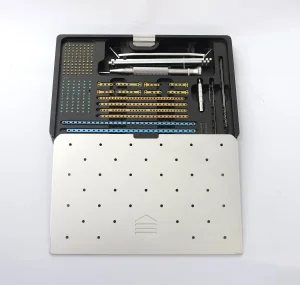
With a production capacity covering more than 8,000 product specifications in orthopedic trauma, spinal implants, and surgical instruments, the company has established competitive advantages in research and development, quality control, and marketing. Our marketing team consists of more than 40 professionals, with a network covering 31 provinces, collaborating with 300+ agents.
As global buyers source orthopedic implants, the focus has shifted from mere cost-efficiency to total cost of ownership and supply chain resilience. Key procurement requirements currently include:
Regulatory Compliance: Manufacturers must adhere to stringent ISO 13485 quality standards, CE marking, and local FDA-equivalent requirements. Our facility ensures that every cannulated screw produced undergoes rigorous tensile testing, torque testing, and sterilization validation.
R&D Collaboration: Hospitals and distributors are seeking partners who can adapt quickly to clinical feedback. By offering proprietary design capabilities, we provide customized solutions that differentiate our partners in their local markets, from Brazil to Egypt, Peru to Morocco.
Scalable Production: Whether it is a small batch for a niche orthopedic application or large-scale supply for a national tender, the ability to maintain quality consistency across high-volume production is the hallmark of a top-tier Chinese factory.