Alur Orthopedic Implants
Alur Orthopedic Implants
Alur Orthopedic Implants
 Premium Orthopedic Systems
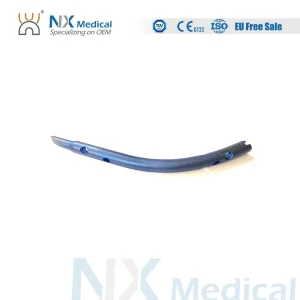
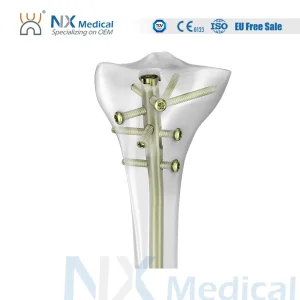
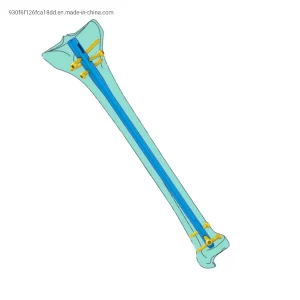
The global orthopedic trauma market is witnessing a significant shift towards minimally invasive stabilization techniques, with Tibial Intramedullary (IM) Nails serving as the gold standard for treating long bone fractures. As the tibia is the most commonly fractured long bone in the human body, the demand for high-quality, biocompatible implants has surged across North America, Europe, and the rapidly developing Asia-Pacific region. Current clinical consensus favors IM nailing over traditional plating due to its biomechanical superiority, load-sharing capabilities, and preservation of the periosteal blood supply, which accelerates secondary bone healing.
In the modern industrial landscape, the production of these devices is no longer just about metallurgy; it is about high-precision bio-engineering. Global healthcare systems are demanding implants that reduce surgical time and minimize complications. This has led to the rise of China-based factories that combine cost-efficiency with cutting-edge CNC technology. Today, a top-tier Tibial Intramedullary Nails factory must navigate complex regulatory environments, ensuring compliance with ISO 13485 and CE certifications to serve international procurement needs.
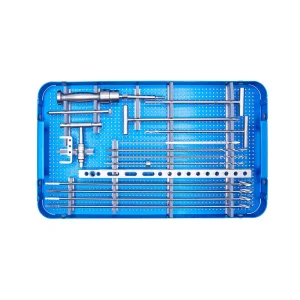
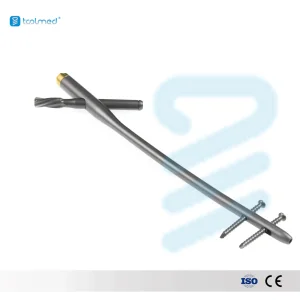
From a commercial perspective, the industry is moving towards "System Solutions." Hospitals and surgical centers no longer purchase solitary nails; they require complete instrument sets and a variety of locking options—including proximal, distal, and multi-directional bolts—to address complex fracture patterns. The competitive edge in this market lies in the ability to provide a comprehensive catalog that covers suprapatellar, infrapatellar, and retrograde approaches.
Year Founded

Exp. Countries

Top Hospitals

IP Certificates

Global Agents
The transition from infrapatellar to suprapatellar entry is the most significant trend in tibial nailing. It allows the knee to remain in a semi-extended position, facilitating easier C-arm imaging and reducing post-operative knee pain.
Modern factories are moving away from stainless steel towards Ti-6Al-4V ELI. These alloys offer a lower modulus of elasticity closer to human bone, reducing stress shielding and improving MRI compatibility.
Carbon-fiber aiming arms and radiolucent handles are becoming standard. This allows surgeons to see through the instrumentation under fluoroscopy, ensuring pinpoint accuracy for distal locking.
Digital transformation is also reaching the factory floor. AI-driven quality control and robotic polishing ensure that each tibial nail has a surface finish that promotes osteointegration while preventing bacterial adhesion. As a leading manufacturer, we stay at the forefront of these trends, investing heavily in Scientific and Technological Innovation. Our product development follows the "blue ocean" strategy, focusing on high-specialization areas like pediatric orthopedics and complex foot and ankle trauma.
Global procurement teams from Brazil to Egypt are increasingly looking to China for their orthopedic trauma needs. The primary drivers are Industrial Scale and Supply Chain Reliability. Unlike smaller European boutiques, a top-tier Chinese factory can maintain a production capacity covering more than 8,000 product specifications. This ensures that even the most niche surgical requirements are met without the long lead times traditionally associated with medical manufacturing.
Furthermore, the "China Price" no longer implies a compromise on quality. With 27 national utility model patents and multiple invention patents, our facility represents the pinnacle of Chinese medical manufacturing. We offer localized support through a network of 300+ agents and collaborate with top-tier teaching hospitals to refine our designs based on real-world surgical feedback.
The company's self-operated export business is rapidly expanding. By participating in over 50 academic conferences annually, we ensure that our international partners are not just buying a product, but are receiving a comprehensive package of technical service and academic promotion. Our presence in Brazil, Colombia, Peru, Egypt, and Morocco is a testament to the global trust in our surgical implants.
The company places great importance on scientific and technological innovation, as well as new product research and development. Its product development strategy follows the principles of "blue ocean, differentiation, and focus strategy," with a strong emphasis on limb orthopedics, pediatric orthopedics, and internal and external fixation products for foot and ankle surgery. The company has obtained 27 national utility model patent certificates, 6 invention patents, and 2 software copyrights.
With a production capacity covering more than 8,000 product specifications in orthopedic trauma, spinal implants, and surgical instruments, the company has gradually established competitive advantages in research and development, production and manufacturing, quality control, marketing, and other key areas.
The marketing team consists of more than 40 professionals, with sales and technical service personnel present in over 20 major cities. The company has built a nationwide marketing network covering 31 provinces and cities, collaborating with more than 300 agents and serving over 300 top-tier teaching hospitals. It actively engages in academic promotion, technical services, and product training, participating in or hosting more than 50 academic conferences for orthopedic doctors annually.
Tibial intramedullary nails are applied in diverse clinical environments, each requiring specific design features. In High-Velocity Trauma Centers, speed is of the essence. Our interlocking systems are designed for rapid deployment, with intuitive color-coded instrumentation that reduces error in high-pressure emergency surgeries. For Geriatric Orthopedics, where bone density may be compromised, our nails offer specialized locking options to ensure stable fixation in osteoporotic bone.
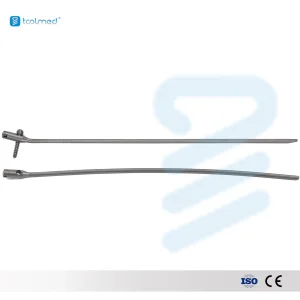
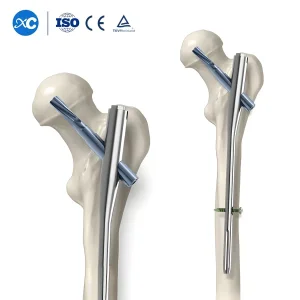
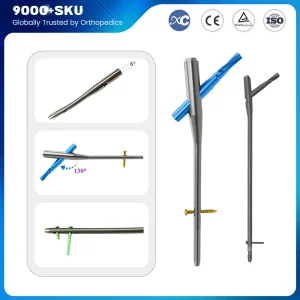
In Sports Medicine clinics, the focus shifts to preserving the soft tissue and patellar ligament. This is where our suprapatellar approach nails excel, allowing for anatomical reduction while protecting the delicate articular structures. By offering diverse solutions ranging from elastic nails for pediatric use to heavy-duty gamma nails for proximal fractures, we ensure that every patient receives a personalized orthopedic solution.