Alur Orthopedic Implants
Alur Orthopedic Implants
Alur Orthopedic Implants
The global spinal fixation market is currently experiencing a transformative era, driven by an aging global population and the increasing prevalence of degenerative disc diseases and spinal trauma. As a leading Spinal Fixation Systems Supplier & Exporter, we recognize that the industry is no longer just about stabilizing the spine; it is about restoring quality of life through precision engineering.
From North America to the emerging markets of Southeast Asia and Latin America, healthcare providers are demanding more sophisticated, durable, and biocompatible materials. The shift from traditional stainless steel to high-grade Titanium alloys and PEEK (Polyetheretherketone) has redefined the standards of long-term patient outcomes. Today, the commercial value of the spinal implant sector accounts for a significant portion of the global orthopedic market, with billions invested annually in procurement and R&D.
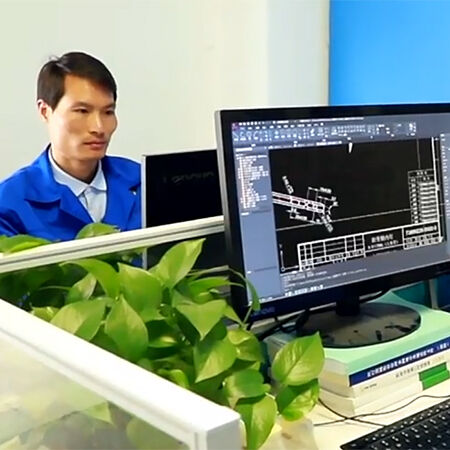
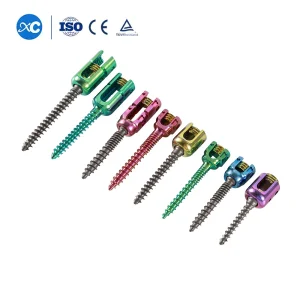
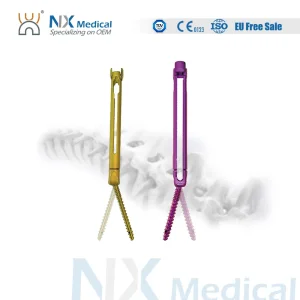
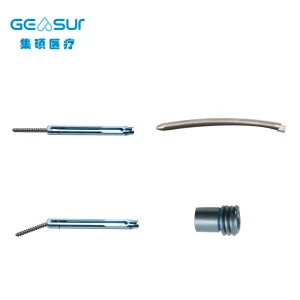
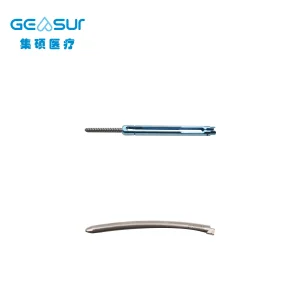
The trend towards Minimally Invasive Surgery (MIS) is dominant. Our cannulated pedicle screw systems are specifically designed to minimize soft tissue damage and accelerate post-operative recovery.
Modern spinal fixation systems are now engineered to be compatible with navigation systems and robotic-assisted surgical platforms, ensuring sub-millimeter placement accuracy.
The industry is moving toward "smart" implants that facilitate better osseointegration. We use advanced surface treatments on our titanium screws to promote faster bone bonding.

Year Founded

Export Countries

Top-tier Hospitals

IP Rights & Patents

Global Agents
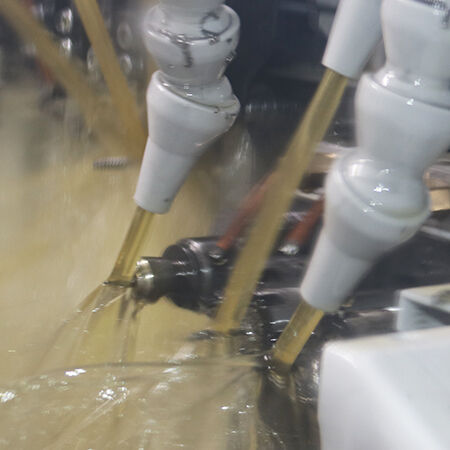
Procurement officers in modern hospitals prioritize three factors: Safety, Sterility, and Cost-Effectiveness. Our systems are designed to meet these rigorous demands across various localized application scenarios:
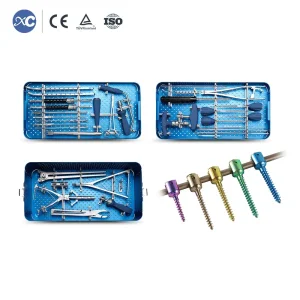
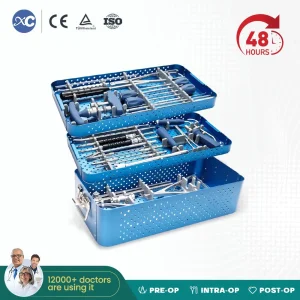
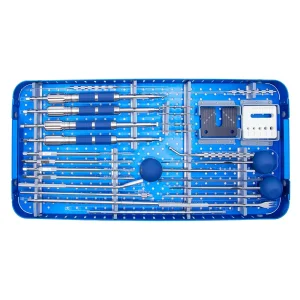
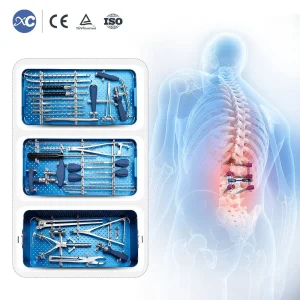
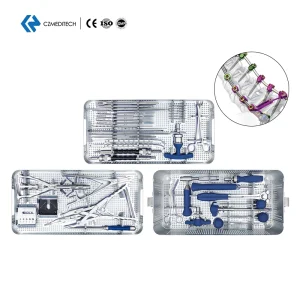
As a leading exporter, we provide comprehensive surgical instrument sets that accompany our implants, ensuring that surgeons in Egypt, Brazil, or Colombia have exactly what they need in the OR.
With 27 national utility model patent certificates and 6 invention patents, our strategy focuses on "Blue Ocean Differentiation." We don't just copy; we innovate specifically for limb and pediatric orthopedics.
We manage over 8,000 product specifications. This scale allows us to provide a "one-stop-shop" for orthopedic trauma, spinal implants, and specialized surgical instruments.
Our competitive advantage lies in our vertical integration—from research to production and quality control, ensuring every pedicle screw meets international medical standards.
The company places great importance on scientific and technological innovation, as well as new product research and development. Its product development strategy follows the principles of "blue ocean, differentiation, and focus strategy," with a strong emphasis on limb orthopedics, pediatric orthopedics, and internal and external fixation products for foot and ankle surgery. The company has obtained 27 national utility model patent certificates, 6 invention patents, and 2 software copyrights.
With a production capacity covering more than 8,000 product specifications in orthopedic trauma, spinal implants, and surgical instruments, the company has gradually established competitive advantages in research and development, production and manufacturing, quality control, marketing, and other key areas.
The marketing team consists of more than 40 professionals, with sales and technical service personnel present in over 20 major cities. The company has built a nationwide marketing network covering 31 provinces and cities, collaborating with more than 300 agents and serving over 300 top-tier teaching hospitals. It actively engages in academic promotion, technical services, and product training, participating in or hosting more than 50 academic conferences for orthopedic doctors annually.
The company's self-operated export business is also taking shape, with sales extending to countries such as Brazil, Colombia, Peru, Egypt, and Morocco.
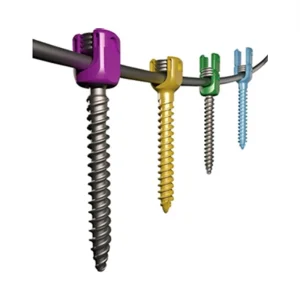
The technical requirements for spinal fixation have evolved from simple stabilization to complex dynamic systems. As a Spinal Fixation Systems Supplier, we focus on the biomechanical interaction between the implant and the human bone. The application of 6.0mm and 5.5mm systems allows for versatility in treating different spinal segments, from the thoracic to the lumbar region. Our titanium pedicle screws are treated with advanced anodizing processes to improve fatigue resistance, a critical factor in preventing implant failure in active patients.
Looking at the industrial status, China has emerged as a global hub for medical device manufacturing. Our factory combines low-cost structural advantages with high-end precision CNC machining. This allows us to offer competitive pricing without compromising on the tight tolerances required for orthopedic implants. Global exporters must navigate a complex web of certifications, and our commitment to maintaining a robust quality management system ensures our products are ready for the demanding markets of Brazil, Egypt, and beyond.
Furthermore, the integration of software and hardware is the next frontier. Our 2 software copyrights represent our investment in the digital future of surgery, where planning software meets physical hardware. For procurement departments of top-tier teaching hospitals, this holistic approach—providing not just the screw, but the training, the instruments, and the technical support—is what differentiates a vendor from a strategic partner.
In localized scenarios, we have seen a high demand for posterior spinal internal fixation in regions with high industrial activity, where workplace-related spinal trauma is more common. Conversely, in aging populations, our bone cement-injectable cannulated screws are becoming the gold standard for treating fractures in osteoporotic patients, providing immediate stability where traditional screws might fail.