Alur Orthopedic Implants
Alur Orthopedic Implants
Alur Orthopedic Implants
The global orthopedic market is witnessing a significant paradigm shift, with Tibial Locking Plates emerging as a cornerstone in trauma fixation technology. As a leading manufacturer, we observe that the commercial landscape is no longer just about mechanical stability; it is about biological optimization. The market for tibial locking systems is projected to grow at a CAGR of over 6.5% annually, driven by an aging global population prone to osteoporosis-related fractures and the rising incidence of high-energy road traffic accidents.
Top trusted tibial locking plates manufacturers are now integrating AI-assisted design to create plates that mimic the natural contours of the tibia more accurately than ever before. This "anatomic pre-shaping" reduces the need for intraoperative bending, thereby preserving the structural integrity of the titanium alloy and minimizing surgical time. In the industrial sector, the shift from conventional stainless steel to high-grade Titanium (Ti-6Al-4V) has set new benchmarks for biocompatibility and fatigue resistance.
Key Market Insight: The demand for distal and proximal tibial locking plates is exceptionally high in developing economies across Latin America, Southeast Asia, and Africa, where healthcare infrastructure is rapidly modernizing and the need for cost-effective, high-quality implants is paramount.
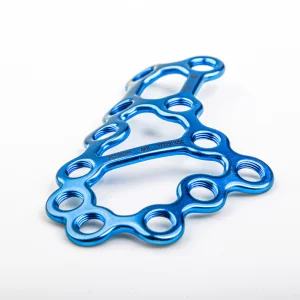
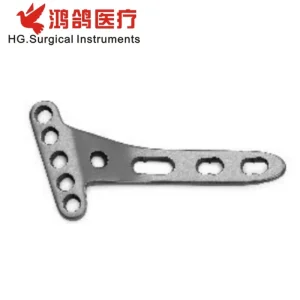
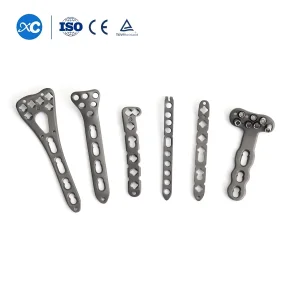
Our titanium locking plates are designed using finite element analysis to ensure optimal load distribution. This specific model features a low-profile design to minimize soft tissue irritation, which is a critical factor in tibial applications where the bone is subcutaneous. The combination of locking and compression holes allows for dynamic compression and fixed-angle stability in a single construct, providing surgeons with maximum flexibility in complex fracture management.
Integration of sensors within locking plates to monitor bone healing progress and detect early signs of implant failure or infection through wireless telemetry.
Moving towards 3D printed titanium scaffolds and plates tailored to specific patient anatomy, particularly for complex comminuted tibial plateau fractures.
Research into magnesium alloys and bio-polymers that provide stability during healing and gradually dissolve, eliminating the need for a second surgery for implant removal.
As a prominent tibial locking plates manufacturer, we are heavily investing in surface treatment technologies. Our latest research focuses on anodic oxidation and plasma spraying to enhance osseointegration, ensuring that the bone-implant interface is as strong as the bone itself. This trend towards "Biological Fixation" is revolutionizing recovery times for patients globally.
For international distributors and hospital procurement officers, selecting a tibial locking plates manufacturer involves more than comparing prices. The global medical device landscape requires strict adherence to international standards and a robust supply chain.
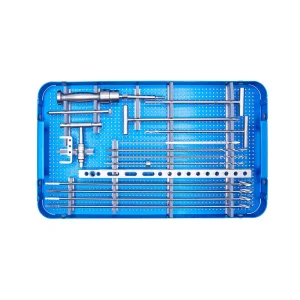
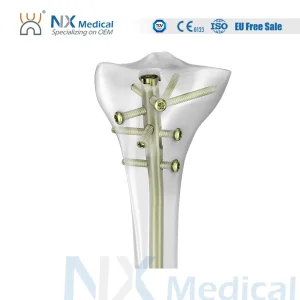
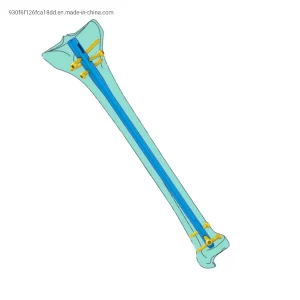
Whether in a high-tech trauma center in Brazil or a regional hospital in Egypt, the application of tibial locking plates varies based on the fracture morphology. Proximal tibial plates are essential for Schatzker Type I-VI fractures, where maintaining the articular surface is vital. Distal tibial plates are used for Pilon fractures where the skin envelope is notoriously thin. Our products are engineered to handle these diverse clinical realities with localized support and training provided by our team of 40+ marketing professionals.
As a China-based factory, we combine the efficiency of large-scale manufacturing with the precision of cutting-edge R&D. Our "Blue Ocean" strategy focuses on delivering high-end limb orthopedics that compete with global tier-1 brands at a more accessible price point.

Year Founded

Exp. Countries

Top Hospitals

IP Certificates

Global Agents
The company places great importance on scientific and technological innovation, as well as new product research and development. Its product development strategy follows the principles of "blue ocean, differentiation, and focus strategy," with a strong emphasis on limb orthopedics, pediatric orthopedics, and internal and external fixation products for foot and ankle surgery. The company has obtained 27 national utility model patent certificates, 6 invention patents, and 2 software copyrights.
With a production capacity covering more than 8,000 product specifications in orthopedic trauma, spinal implants, and surgical instruments, the company has gradually established competitive advantages in research and development, production and manufacturing, quality control, marketing, and other key areas.
Our marketing team consists of more than 40 professionals, with sales and technical service personnel present in over 20 major cities. The company has built a nationwide marketing network covering 31 provinces and cities, collaborating with more than 300 agents and serving over 300 top-tier teaching hospitals. It actively engages in academic promotion, technical services, and product training, participating in or hosting more than 50 academic conferences for orthopedic doctors annually.
The company's self-operated export business is also taking shape, with sales extending to countries such as Brazil, Colombia, Peru, Egypt, and Morocco.