 Alur Orthopedic Implants
Alur Orthopedic Implants
Alur Orthopedic Implants
High-precision orthopedic implants engineered to support complex primary and secondary revision joint reconstructions.
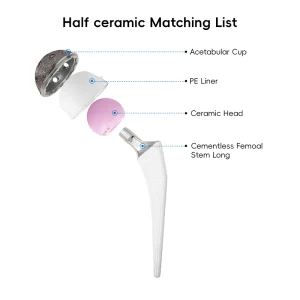
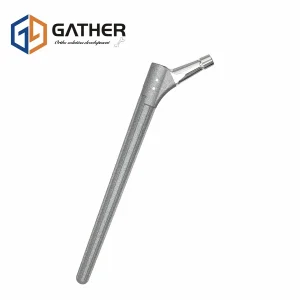
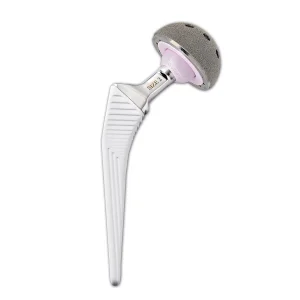
Togo's healthcare system, particularly in major hubs like Lomé, is undergoing significant modernization. As primary hip and knee arthroplasties increase in frequency across specialized clinical centers such as the CHU Sylvanus Olympio and private orthopedic clinics, the long-term clinical challenge of joint revision has emerged. Over time, factors such as aseptic loosening, periprosthetic joint infection (PJI), osteolysis, and periprosthetic fractures require highly specialized Revision Hip and Knee Systems.
For orthopedic surgeons in Togo and neighboring West African states (Benin, Burkina Faso, Ghana), access to robust, modular revision implants is critical. Revision surgeries require systems that can handle severe bone loss, restore proper joint mechanics, and ensure long-term implant fixation. By providing modular hip stems, modular knee systems with rotating hinges, and robust augmentation options, we help local surgeons address complex anatomical challenges and improve patient mobility.
Furthermore, local logistical and storage capacities in West Africa demand that implants arrive with certified sterile packaging, clear sizing systems, and matching surgical instrumentation to minimize intraoperative surprises and reduce prolonged anesthesia times.
How our advanced design engineering addresses structural joint failures and promotes reliable osseointegration.
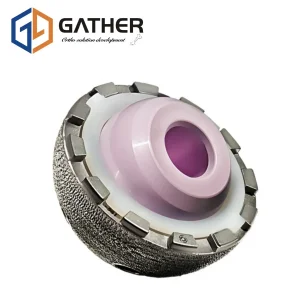
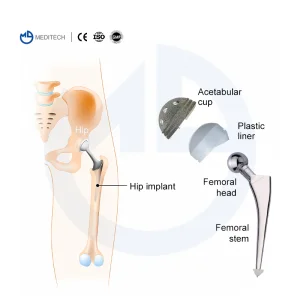
Our revision hip systems leverage S-ROM style modularity. By decoupling proximal-distal sizing, surgeons can optimize proximal fit and rotational stability while ensuring secure distal fixation in the femoral canal, even in compromised bone environments.
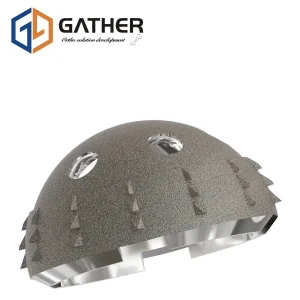
Utilizing state-of-the-art additive manufacturing, our porous titanium structures mimic natural trabecular bone. This achieves a low elastic modulus and high friction coefficient, accelerating early osseointegration and preventing stress shielding.
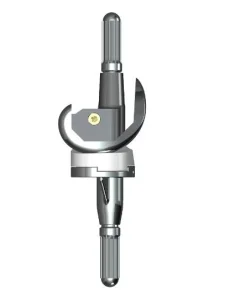
For severe coronal/sagittal knee instability during revision, the HRSK Hinged Rotating Total Knee System provides a constrained mechanism. It permits controlled rotation, reducing shear stress on the bone-implant interface and avoiding early failure.
Helping procurement managers, hospital boards, and ministries secure high-quality implants reliably.
Purchasing orthopedic implants in West Africa often involves complex public and private tenders. We provide comprehensive regulatory documentation, including ISO 13485 certifications and CE markings, ensuring seamless customs clearance at the Port of Lomé and alignment with the health procurement guidelines of Togo.
Our teams construct specific orthopedic implants cataloging that covers trauma, spine, and joint arthroplasty, streamlining inventory management and facilitating rapid deployment for urgent surgical needs.
Revision arthroplasty requires significant surgical training and technical support. We offer comprehensive academic promotion and product training, participating in and hosting over 50 academic conferences for orthopedic surgeons annually.
For hospitals in Togo, we support orthopedic surgical units with precise bone-cutting templates, trial components, and hands-on instrument workshops to ensure local surgical teams can operate with total confidence and zero delays.
How our automated facility ensures high-precision production for international orthopedic demands.
Our manufacturing facility places scientific and technological innovation at its core. Following a strategic focus on orthopedic trauma, spinal implants, and surgical instruments, we maintain an annual production capacity covering more than 8,000 product specifications. Our integrated production pipeline ensures total design fidelity and structural reliability:
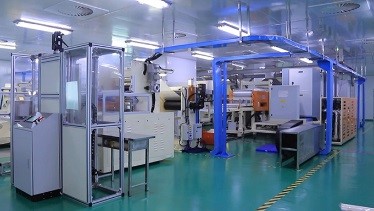
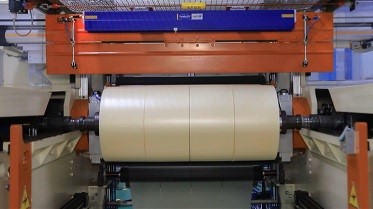
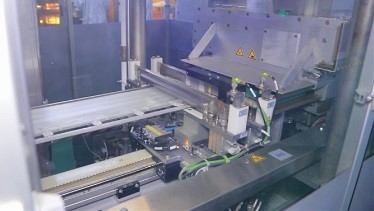
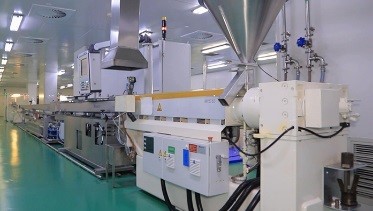
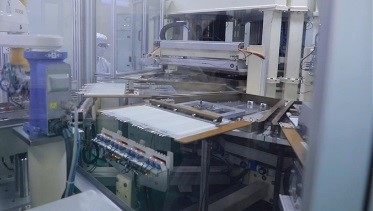
To ensure that every implant deployed to clinical environments in Togo performs flawlessly under mechanical loads, our laboratory is equipped with state-of-the-art testing equipment. We monitor material properties and sterilization safety down to the micro-level:
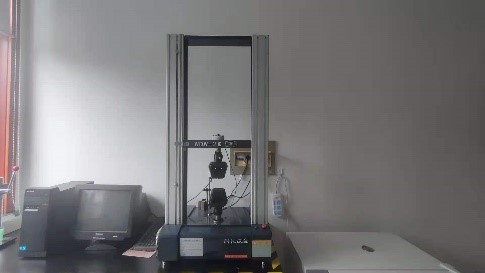
Verifies structural tensile strength and fatigue life of hip/knee components under cyclical load simulations.
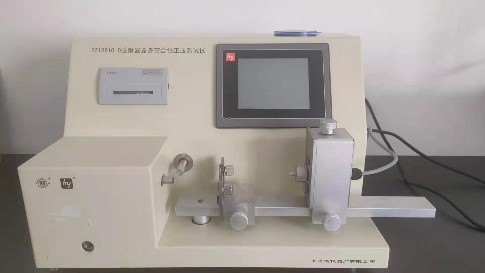
Ensures hermetic seal integrity of sterile packaging barrier to prevent environmental contamination.
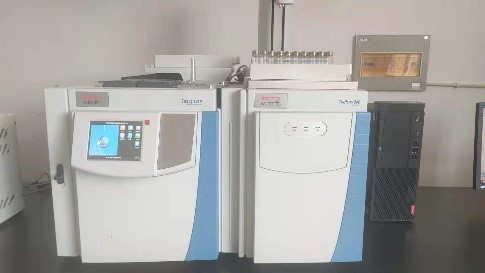
Measures residual ethylene oxide gas on implants to confirm strict adherence to international safety limits.
"Our research and development strategy utilizes a 'blue ocean, differentiation, and focus strategy' focusing on limb orthopedics, pediatric orthopedics, and foot/ankle surgery implants, securing 27 national utility model patents, 6 invention patents, and 2 software copyrights."
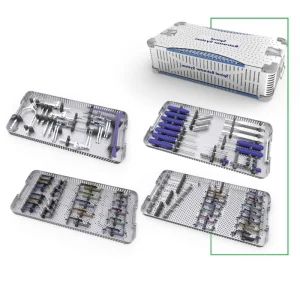
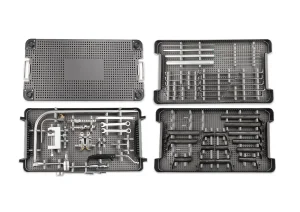
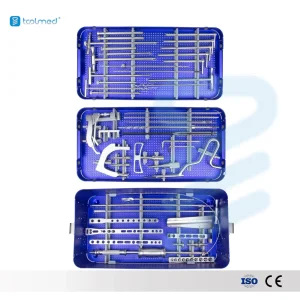
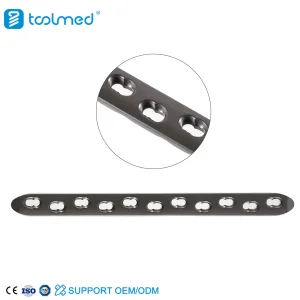
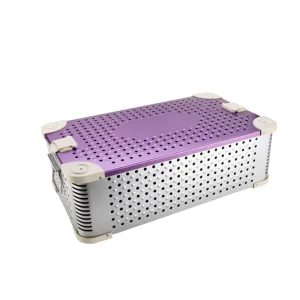
Ancillary instrument sets and orthopedic fixation implants to support total joint reconstructive workflows.
Expert technical answers regarding import, application, and product specifications for Togo hospitals.
In revision cases, bone quality in the proximal femur is often severely compromised due to osteolysis or prior implant removal. Standard monoblock hip stems struggle to achieve rotational stability and correct limb length simultaneously. The S-ROM modular stem allows independent positioning of the proximal sleeve (to fit the metaphysis) and the distal stem (to secure distal diaphyseal fixation). This design prevents micromotion, supports patient weight distribution, and accommodates the unique anatomical requirements of Togolese patients.
All our orthopedic implants, including revision knee systems and hip joints, strictly comply with ISO 13485 (Medical Devices Quality Management Systems) and have CE approval. These certifications are recognized by Togo's Ministry of Health and regulatory authorities across the ECOWAS/UEMOA regions, facilitating swift customs clearance and approval for public hospital use.
The HRSK (Hinged Rotating Total Knee System) is engineered for complex revisions where collateral ligaments are incompetent or significant bone loss is present. It uses a rotating hinge design that allows natural internal/external rotation while constraining lateral translation. Metaphyseal sleeves and distal femoral/proximal tibial blocks can be attached to fill significant bone voids, avoiding the need for massive bone grafting and ensuring stable reconstructive results.
Sterility is critical to preventing periprosthetic joint infections (PJI). All implants undergo cleanroom assembly and validation. Packaging is tested on our industrial Tightness Tester and sterilization residues are monitored using Gas Chromatography. We use double-barrier medical-grade Tyvek packaging to maintain sterile integrity during international transit, sea freight through the Port of Lomé, and storage in tropical climates.
Yes. We supply dedicated orthopedic instrument sets, including Hip Revision Reamer Sets, Femoral Trial Sets, and specialized extraction tools. These instrument sets are designed to ensure precise bone cuts, clean extraction of old cement and implants, and exact trial fitting, which minimizes intraoperative error and reduces operating room times.
Whether you are a medical distributor in Lomé, an orthopedic surgeon, or a hospital procurement director, we offer custom-tailored procurement plans, technical support, and reliable logistics.
Request Quote & Product Catalog