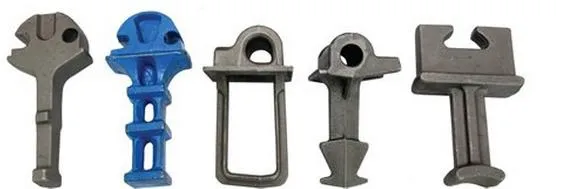
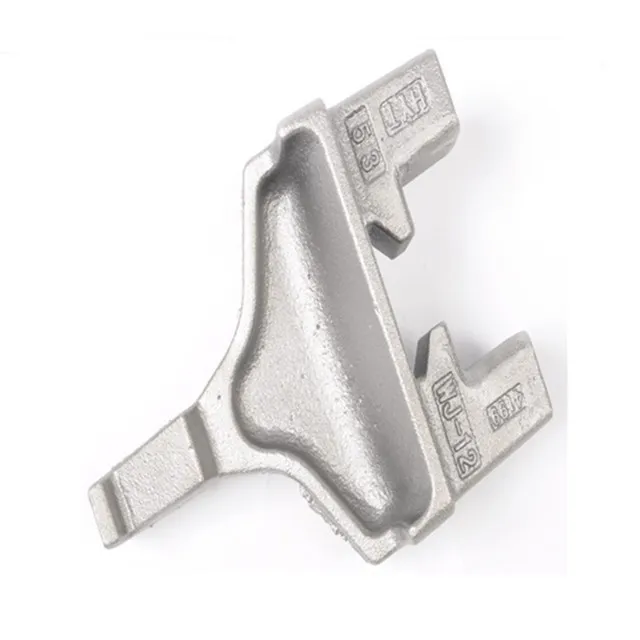
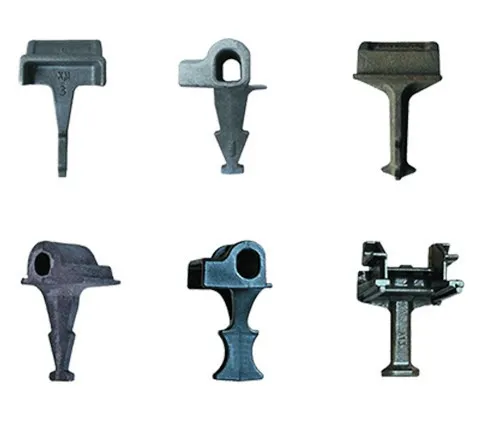
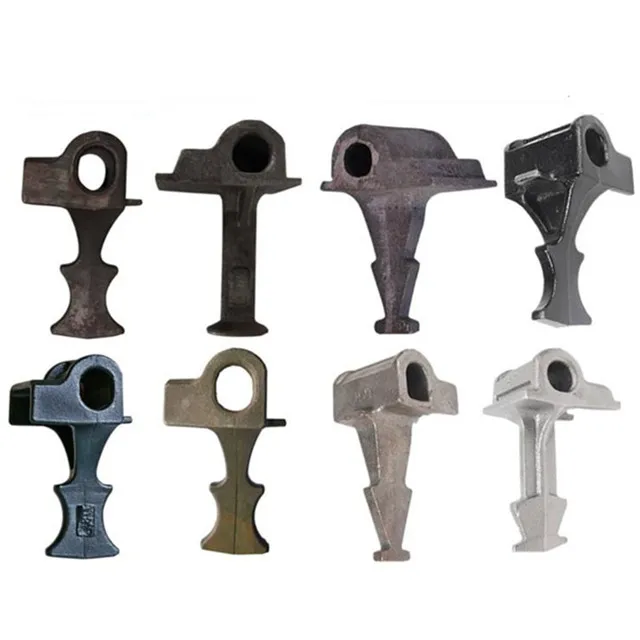
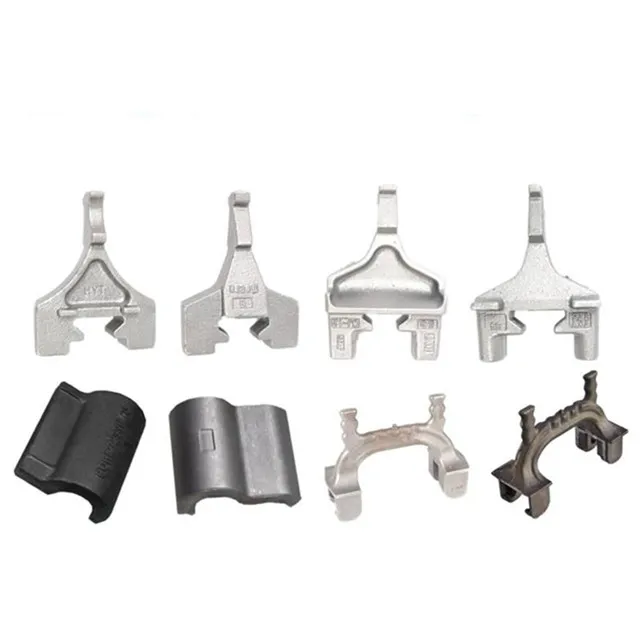
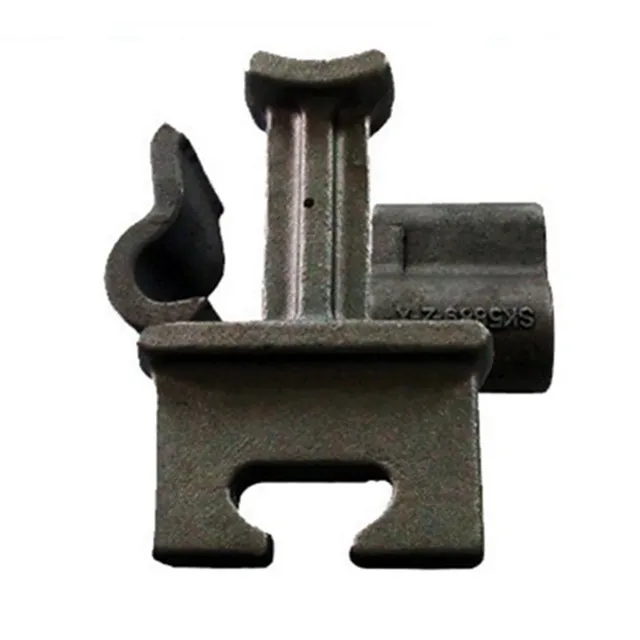
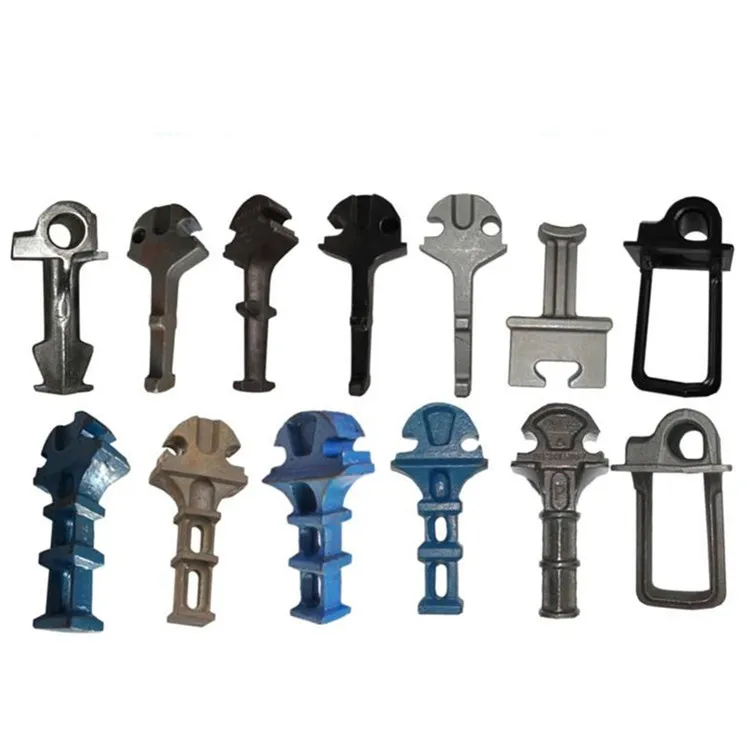
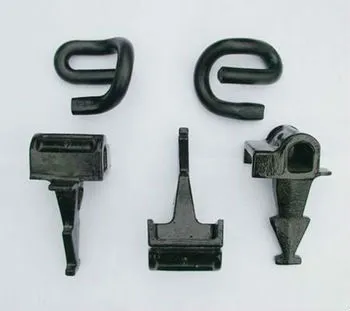
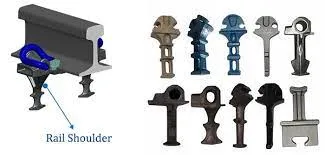
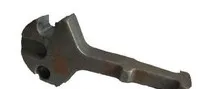
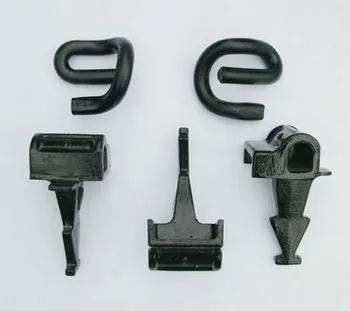
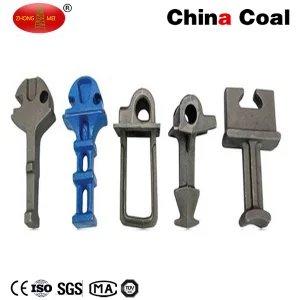
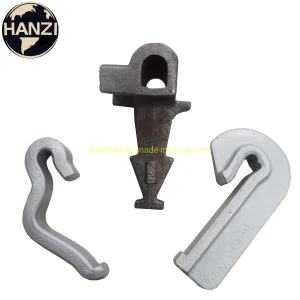
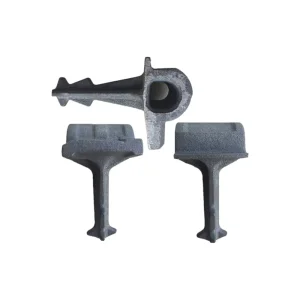
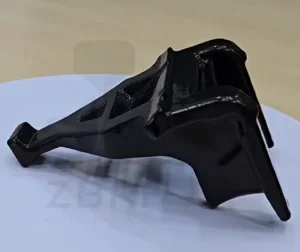
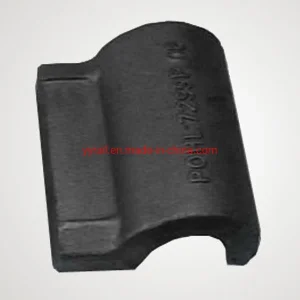
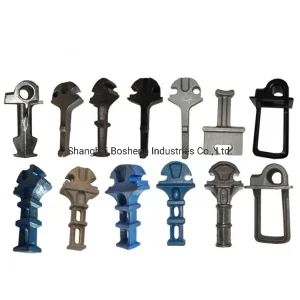
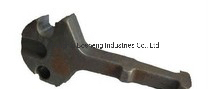
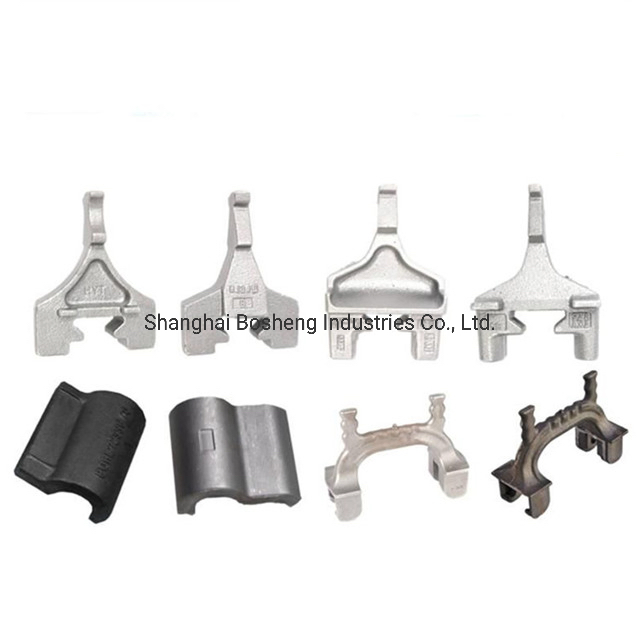
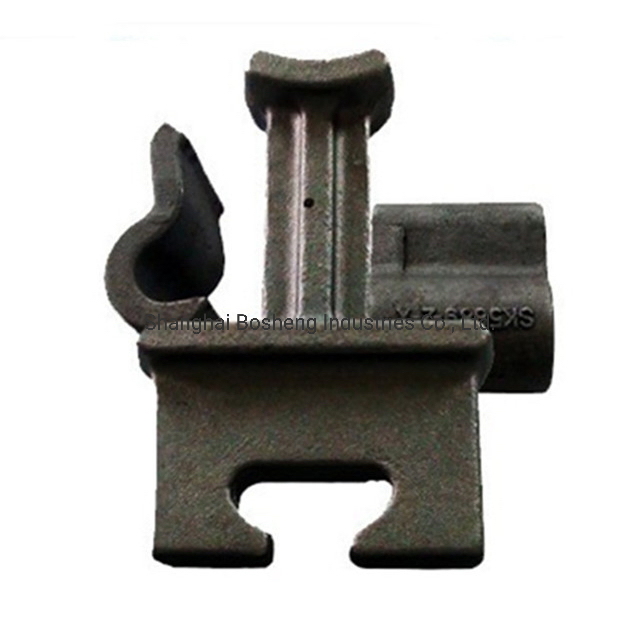
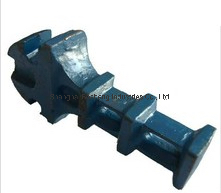
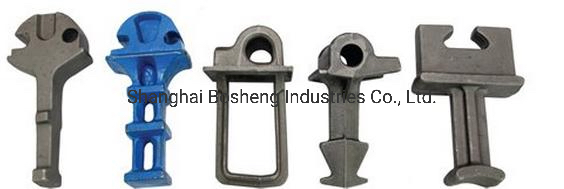
Rail shoulder, also called rail iron shoulder, is mainly used to be casted in the concrete ties to fixate elastic rail clips. According to the shape, it can be classified into Single Stem Rail Iron Shoulder and Twin Stems Rail Iron Shoulder. Besides, according to the manufacturing ways, rail shoulder can be divided into 3 types: casting rail shoulder, weld-on rail shoulder and hot forging rail shoulder.
The rail shoulder is embedded in concrete at the time of casting, it's used to grips the clip effectively and provides lateral support to rail.
The Rail shoulder is semi-embedded part cast in the concrete rail ties to fix the elastic rail clip to the base plate. There are two common types of rail shoulders available: Cast-in Shoulder and Weld-on Shoulder, both of which are used for the fixing of elastic rail clips. One is Single Stem Iron Shoulder used in pre-stressed concrete ties and the other is Twin Stem Iron Shoulder used in Bi-Block or Twin Block concrete ties.
The production process follows strict ISO 9001 standards. All processes are in accordance with quality management requirements, from supplier control to finished products, ensuring standardized procedures:
01
Before producing Rail Shoulder, we check and test the raw materials, requiring documentation for chemical composition and mechanical properties.
02
Quality control inspectors perform sample sampling and batch testing after the manufacturing process, providing material certificates for every batch.
03
We conduct physical and chemical testing. If results do not meet specific requirements, the materials are rejected immediately.
04
Regular quality coordination meetings and technical guidance are provided to ensure only qualified products are delivered prior to shipment.
?
Frequently Asked Questions
What is the main function of a rail shoulder?
The rail shoulder is primarily used to be casted into concrete ties to fixate elastic rail clips, providing essential lateral support to the rail.
What are the different types of rail shoulders based on manufacturing?
Rail shoulders are generally classified into three types based on production: casting rail shoulders, weld-on rail shoulders, and hot forging rail shoulders.
What is the difference between single stem and twin stem shoulders?
Single stem iron shoulders are typically used in pre-stressed concrete ties, while twin stem iron shoulders are designed for Bi-Block or Twin Block concrete ties.
How is the quality of the rail shoulder ensured?
Quality is managed via an ISO 9001 system, including raw material testing (chemical and mechanical), batch sampling during manufacturing, and final physical/chemical inspections.
Are your products certified for international standards?
Yes, all products are manufactured under an ISO 9001/2008 certified quality management system to ensure high performance and reliability.
What is the production capacity for these rail components?
The facility has a robust production capacity of approximately 500,000 tons per year to meet large-scale infrastructure demands.
 Alur Orthopedic Implants